
On this page
Executive summary
Managing general agents (MGAs)[1] play a significant role in the distribution of life and health (L&H) insurance products in Ontario. The Financial Services Regulatory Authority of Ontario (FSRA)’s past supervisory reviews[2] of L&H Insurers and MGAs have identified potential market conduct and consumer risks in this distribution model, prompting increased supervision to ensure consumer protection. To better understand these risks, FSRA took a phased approach to gathering market intelligence.
In May 2025, FSRA distributed the Life Insurer Questionnaire: MGA Distribution and Business Practices (“the Questionnaire”) to eight L&H Insurers in Ontario. The Questionnaire assessed Insurer-MGA relationships, product distribution, compliance and oversight practices, and controls over delegated activities. The participating Insurers represented approximately 65% of the L&H market in Ontario by direct written premium (DWP) as of December 31, 2024. This report presents the findings from the first phase of FSRA’s proactive initiative.
Highlights
| Area of supervision | Key finding |
|---|---|
| Distribution | FSRA found no correlation between the size of an Insurer and the number of MGAs used. For example, a small Insurer may use multiple MGAs, and a large one may use a few. |
| Compliance and oversight | All Insurers delegated, in some form, recruiting, screening, training and monitoring of agents to MGAs. However, oversight practices varied, with less than 75% conducting formal reviews of their MGAs and agents. |
| Products | Term Life and Whole Life were the most widely offered products and were standardized across each Insurer’s MGA distribution network. |
In parallel, FSRA conducted 50 life agent examinations[3], which identified gaps in best practices, including needs assessments, product documentation, and advisor disclosure. FSRA will publish the full Life Agent Supervision Report 2025-26 by the end of this year. Combined, the findings from the Questionnaire and life agent examinations suggest that inconsistent oversight by Insurers and MGAs may contribute to gaps in agent practices and consumer outcomes.
FSRA will launch the next phase of the Questionnaire this fiscal year, and insights will continue to inform FSRA’s licensing, policymaking, supervision, as well as our work with the Ministry of Finance with respect to Ontario’s proposed licensing framework for L&H MGAs (“the MGA Framework”). FSRA will also continue to supervise Insurers as outlined in the 2026-27 Supervisory Plan for L&H Insurers. In addition, FSRA will undertake a cross-sectoral recruitment practices sweep to better understand recruitment and screening practices and their potential impact on consumer outcomes.
Background and key highlights
With the establishment of FSRA, supervision evolved to adopt a more holistic, end-to-end view of insurance distribution. This included assessing Insurers’ implementation of Fair Treatment of Consumers (FTC) principles[4] and conducting thematic reviews of distribution practices. These reviews identified gaps in Insurers’ oversight of delegated[5] agent-related functions, including agent screening and supervision.
At the same time, the build-out and expansion of FSRA’s Life Agent Supervision team and related reviews identified gaps in the adoption by life agents[6] of industry best practices[7] intended to achieve fair treatment of consumers, reinforcing concerns that gaps existed both in oversight frameworks and in agent-level outcomes.
In response, FSRA launched the Questionnaire alongside targeted life agent examinations as complementary supervisory tools. The Questionnaire relied on self-reported information provided by participating Insurers and did not include independent verification of responses.
This report presents Phase 1 of FSRA’s intelligence-led analysis. It summarizes insights from the Questionnaire and related life agent examinations to provide a more holistic view of the L&H distribution framework —from oversight structures to agent-level practices.
Key highlights
Distribution
FSRA reviewed Insurer–MGA distribution structures, focusing on the scale of MGA and agent usage and Insurers’ reliance on MGAs.
- participating Insurers used approximately 10 to 300 MGAs in Ontario, with 4 MGAs consistently appearing among Insurers’ top providers
- insurers reported using approximately 3,800 to 26,800 agents, with active[8] agents typically comprising 10%–24% of each MGA’s total agent population
- most participating Insurers engaged at least one MGA operating under a tiered-recruitment business model[9], which emphasizes rapid agent onboarding and agent-driven recruitment
- no correlation was observed between Insurer size and the number of MGAs or agents used
Overall observation – Insurer distribution networks varied significantly across the market. Market share did not appear to determine distribution scale or structure, indicating a high degree of variation in MGA and agent engagement strategies.
Product information
FSRA reviewed product-level practices across MGA distribution channels[10], including L&H product types and business mix.
- term Life and Whole Life were the most widely offered and distributed products, available through almost all participating Insurers
- the majority of participating Insurers offered a consistent product suite across all MGAs, with limited variation by distribution partner
Overall observation – Product offerings by each individual Insurer were largely standardized across their respective MGA distribution networks, particularly for core life insurance products.
Compliance and oversight
FSRA reviewed compliance and oversight practices, focusing on how Insurers delegate, supervise, and monitor agent related functions performed by MGAs.
- all participating Insurers delegated agent related functions to MGAs, including recruiting[11], screening[12], training[13], and monitoring[14].
- across all delegated functions, the most common approach was a shared responsibility model, with Insurers reporting that they retained ultimate accountability
- participating Insurers varied in their oversight of MGAs and agents. Depending on the type of review, approximately 63%–75% reported conducting formal reviews of their MGAs and agents, while the remaining 25%–40% indicated that they did not conduct such reviews
- the number of proactive[15] agent reviews conducted ranged from 0 to approximately 120, representing 0% to 4% of each Insurer’s total active agent population
Overall observation – While all participating Insurers delegated agent-related functions to MGAs, oversight and monitoring practices varied, and in some cases, were not being undertaken.
Life agent examination findings (2025–26)
The observations related to Compliance and Oversight align with several key findings based on 50 life agent examinations across 10 MGAs[16] focused on the review of business best practices. The findings point to gaps in training, monitoring, and oversight of life agents contracted with MGAs. Key findings include[17]:
- Needs assessments and sales practices: 66% of agents did not use needs-based sales practices to identify products and coverage that aligned with consumer needs. FSRA found this issue at all 10 MGAs.
- Illustrations: Across all MGAs, 74% of agents failed to provide illustrations showing policy value projections and underlying assumptions.
- Advisor disclosure: 53% of agents at 9 MGAs did not provide complete advisor disclosures. These disclosures should include information about the life agent’s licensing jurisdiction, compensation structure, and distribution channels.
Overall observation – Findings show systemic gaps in agent sales practices, signaling potential weak training, monitoring, and supervision by MGAs.
Outcomes and next steps
Taken together, the Questionnaire and life agent examination findings provide further insights into Ontario’s L&H distribution framework. The Questionnaire highlights variability in distribution models, delegation practices, and oversight, while the agent examination findings provide additional insights into gaps in business best practices at the point of sale.
Collectively, these findings suggest that inconsistent oversight by Insurers and MGAs can contribute to deficiencies in agent conduct, with implications for:
- fair treatment of consumers, which at its core means offering or recommending products or services to consumers that meet their needs, and,
- proactive identification and mitigation of conduct risks to foster consumer trust, strengthen reputation, and minimize the need for regulatory intervention
To address these issues, FSRA will continue to work with government and industry stakeholders to advance the MGA Framework and strengthen end-to-end oversight across the distribution chain, informed by insights from supervisory activities. FSRA will also launch Phase 2 of the Intelligence Questionnaire and issue targeted communications to reinforce life agents’ understanding of regulatory expectations.
The sections below provide detailed observations from the Questionnaire that support the key highlights and outcomes outlined above.
Detailed observations[18]
1. Distribution[19]
This section focused on how participating Insurers use MGAs and structure their distribution arrangements. This independent distribution channel was the most prevalent among reviewed Insurers and continues to grow. Insurers do not follow a single approach to contracting with or using MGAs; arrangements vary based on each Insurer’s distribution strategy and operational needs.
Key observations
- All participating Insurers used MGAs, with the number of MGAs used in Ontario ranging from approximately 10 to 300, with 4 MGAs consistently appearing among Insurers’ top providers.
- Insurers reported using approximately 3,800 to 26,800 agents, with active agents typically comprising 10%-24% of each MGA’s total agent population.
- Most participating Insurers used at least one MGA with a tiered-recruitment model.
- There was no observed correlation between Insurer size, based on market share measured by the direct written premiums (DWP) and the number of MGAs or agents used.
1.1 MGA usage
FSRA asked participating Insurers to report the total number of MGAs they used.
All participating Insurers reported using MGAs as part of their distribution model. In Ontario, the number of MGAs ranged from approximately 10 to 300. Half of participating Insurers reported having ownership ties with one or more MGAs (e.g., where an Insurer’s parent company holds a controlling interest or another ownership interest in the MGA).
There was no observed correlation between Insurer size, based on market share measured by DWP, and the number of MGAs used. For example, the Insurer with the highest number of MGAs had less than 1% market share in Ontario.
For all participating Insurers, the number of MGAs used in Ontario matched the number of MGAs with written contractual agreements[20] with them.
1.2 Commonly used MGAs
FSRA asked participating Insurers to provide two lists of their top five[21] MGAs: one based on the DWP, and one based on the number of policies sold.
Four MGAs appeared consistently across these lists. Given that participating Insurers represented approximately 65% of Ontario market share, this suggests that these MGAs likely account for a notable portion of MGA-distributed business among the participating Insurers in Ontario.
1.3 Agent populations
FSRA asked participating Insurers about the number of agents authorized to distribute their products.
The number of Ontario agents reported by participating Insurers ranged from approximately 3,800 to 26,800, reflecting the diverse scale of distribution networks. One Insurer was unable to confirm its total agent count as it did not track this information, since it has direct contractual agreements with its MGAs, but not with the agents.
Active Ontario agents ranged from approximately 2,600 to 11,400, representing between 10% and 24% of each MGA’s total agent population. One Insurer was an outlier at 84%, reflecting its partial reliance on a captive distribution model[22] and the absence of contractual agreements with MGAs using a tiered-recruitment business model.
Sponsored[23] Ontario agents ranged from 2 to approximately 900, representing between 0.02% and 6% of each MGA’s total agent population. Three Insurers were unable to confirm these numbers.
There was no observed correlation between the size and market share of an Insurer, measured by DWP, and the number of agents it used. For example, one Insurer with six times the DWP had roughly the same number of agents as a significantly smaller Ontario Insurer.
1.4 Business/Distribution Models
FSRA asked participating Insurers to identify the type of distribution models used by their MGAs, including whether any MGAs used a tiered-recruitment business model.
Most participating Insurers used at least one MGA with a tiered-recruitment business model. This model relies heavily on recruiting and onboarding new agents and encouraging existing agents to recruit additional agents.
In some cases, participating Insurers reported that a sizeable portion of business was generated through an MGA using this business model.
2. Product information[24]
This section focused on the individual L&H insurance products being offered/distributed by participating Insurers and the proportion of business generated through their top five MGAs.
Participating Insurers were selected based on their relatively large market share in Ontario. As a result, their responses were expected to reflect a variety of L&H products offered across the industry.
The proportion of each Insurer’s business distributed through MGAs varied and depended largely on the nature and depth of its MGA relationships.
Key observations
- In L&H, Term Life and Whole Life insurance were the most widely offered products through almost all participating Insurers.
- The majority of participating Insurers offered a consistent product suite across all MGAs, with limited variation by distribution partner.
2.1 Product types offered and business mix
FSRA asked participating Insurers to identify the types of L&H products they offered, based on a list of product types categorized by class[25] and sub-class[26]:
Participating Insurers reported the following:
- In L&H, Term Life and Whole Life insurance were the most widely offered/distributed products by almost all participating Insurers.
- Universal Life was offered by half of participating Insurers.
- In Accident and Sickness (A&S), all participating Insurers offered Critical Illness or Disability products.
- Annuities, including Segregated Funds[27], were offered by most participating Insurers.
The majority of participating Insurers reported offering the same product suite through all their MGAs.
2.2 Target markets
FSRA asked participating Insurers whether they had identified a specific target consumer market for each product type. Most participating Insurers reported that they had done so. Within this group, the majority also reported formally communicating the target market to their MGAs.
While there is no explicit requirement to identify and communicate target markets, this practice aligns with CCIR’s Guidance Conduct of Insurance Business and Fair Treatment of Customers (FTC Guidance)[28] and Insurance Core Principles (ICP)-19 of the International Association of Insurance Supervisors[29]. These standards support product-level suitability and distribution oversight by encouraging Insurers to clearly define and communicate distribution parameters for their products.
The Questionnaire did not assess the implementation or operational effectiveness of this practice.
3. Compliance and oversight[30]
This section focused on business practices in the Insurer–MGA relationship, including the delegation of agent-related functions from Insurers to MGAs, any further delegation by the MGAs, and oversight of these delegated functions. Insurers, MGAs, or both may conduct reviews or audits to monitor and supervise these activities.
Key observations
- All participating Insurers reported delegating agent-related functions to their MGAs.
- Half of participating Insurers had documented policies and procedures for supervising and monitoring delegated functions across all MGAs.
- For all delegated functions, the most common arrangement was shared responsibility between the Insurer and the MGA, with the Insurer retaining final accountability.
- Participating Insurers reported varying activities for monitoring and supervising MGAs and agents.
3.1 Delegation of agent-related functions
FSRA asked participating Insurers whether they delegated any agent-related functions—such as agent recruiting, screening, training, or monitoring—to their MGAs. All participating Insurers reported delegating at least some functions, although the extent of delegation varied by Insurer.
FSRA also asked participating Insurers whether they formally evaluated their MGAs’ varying size, complexity, and/or resources before delegating agent-related functions. The majority reported doing so for all MGAs. Half of participating Insurers reported delegating the same agent-related functions to all MGAs.
These results were consistent with observations from FSRA’s previous supervisory reviews, which found that Insurers continue to delegate various agent-related functions to MGAs.
3.1.1 Policies and procedures
FSRA asked participating Insurers whether they maintained documented policies and procedures (P&P) to supervise and monitor delegated agent-related functions.
Half of participating Insurers reported having P&P that applied to all their MGAs. One Insurer reported having P&P for selected MGAs only. The majority of participating Insurers reported communicating written expectations and requirements to all MGAs on how to carry out delegated functions. Others reported communicating these expectations and requirements to only some MGAs, or not at all.
The Questionnaire did not assess the implementation or operational effectiveness of these practices.
3.1.2 Delegation of Agent-Related Functions
For each function listed in Section 3.1, FSRA asked participating Insurers to describe their delegation arrangements with MGAs. Specifically, FSRA asked whether each function was fully delegated to the MGA, shared between the Insurer and the MGA, or not delegated. Where responsibilities were shared, FSRA also asked whether the Insurer retained the final determination.
The following subsections present results for agent recruiting, screening, training, and monitoring.
Recruiting
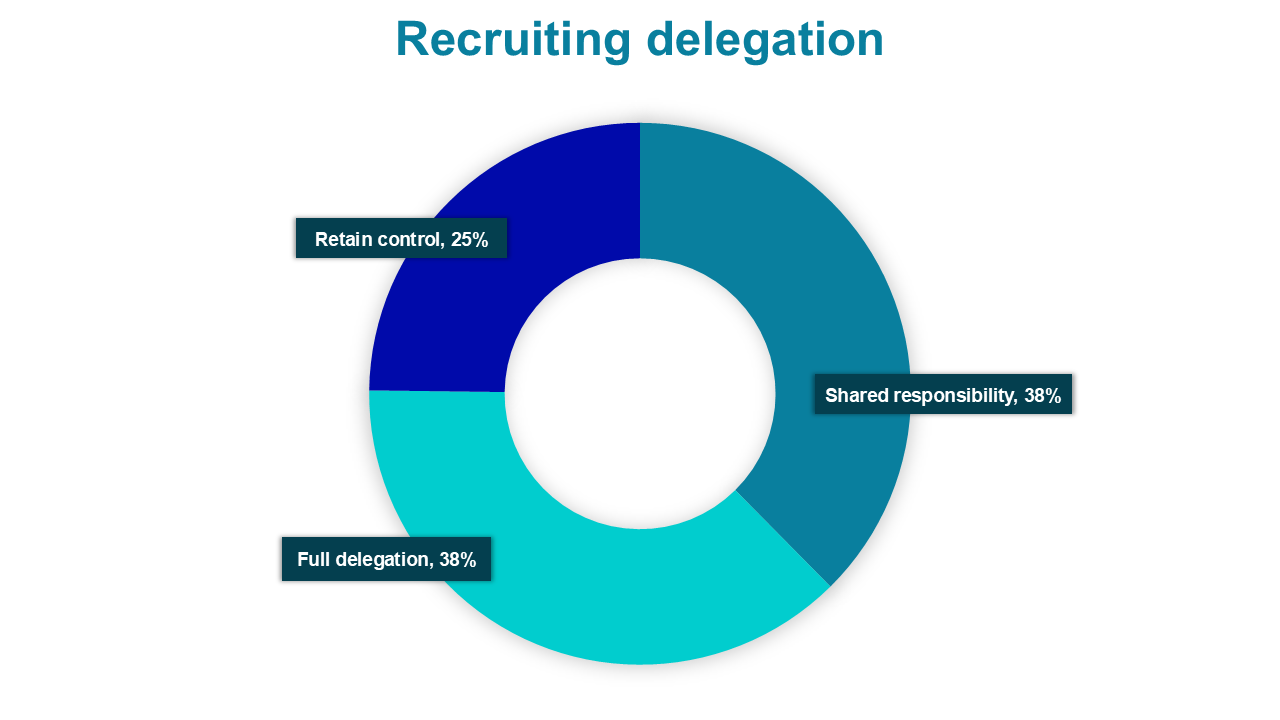
Recruiting responsibilities varied across participating Insurers. Less than half fully delegated recruiting to MGAs, while some shared recruiting responsibilities with their MGAs and a small fraction did not delegate recruiting responsibilities.
Screening
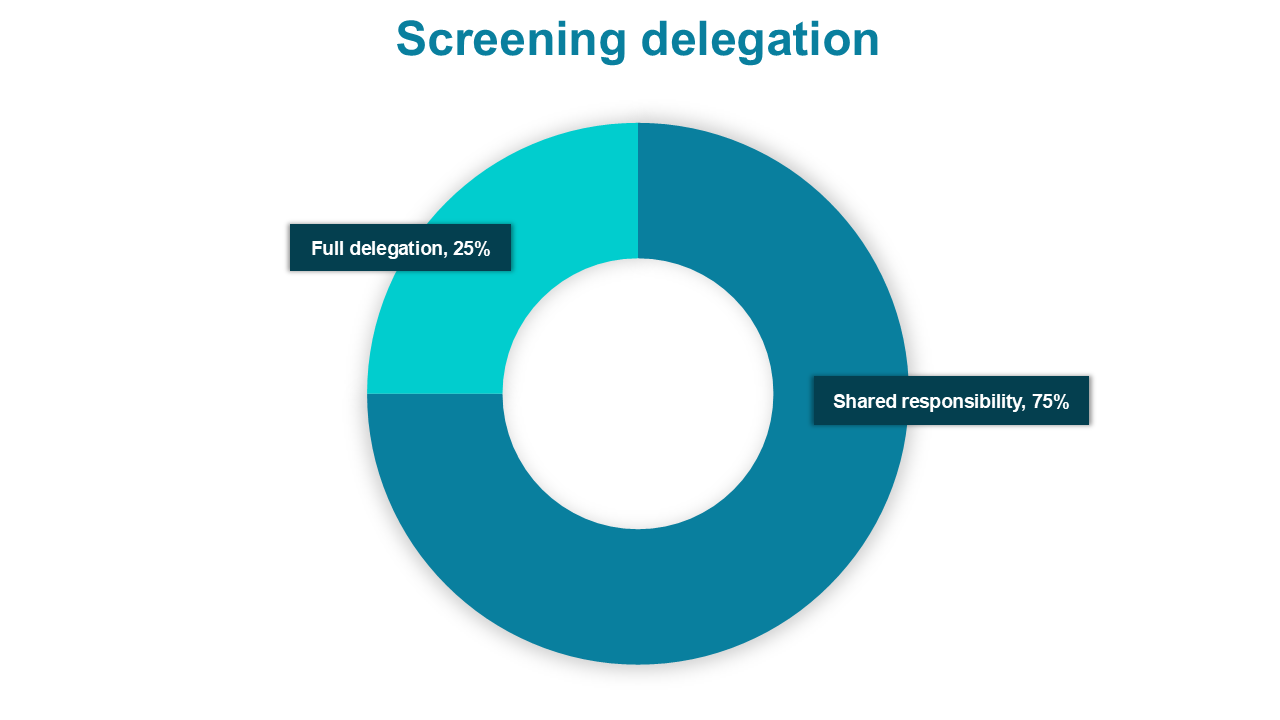
Most participating Insurers shared screening responsibilities with MGAs, while a small fraction fully delegated this function, meaning MGAs performed screening activities in their entirety on the Insurers’ behalf.
Training
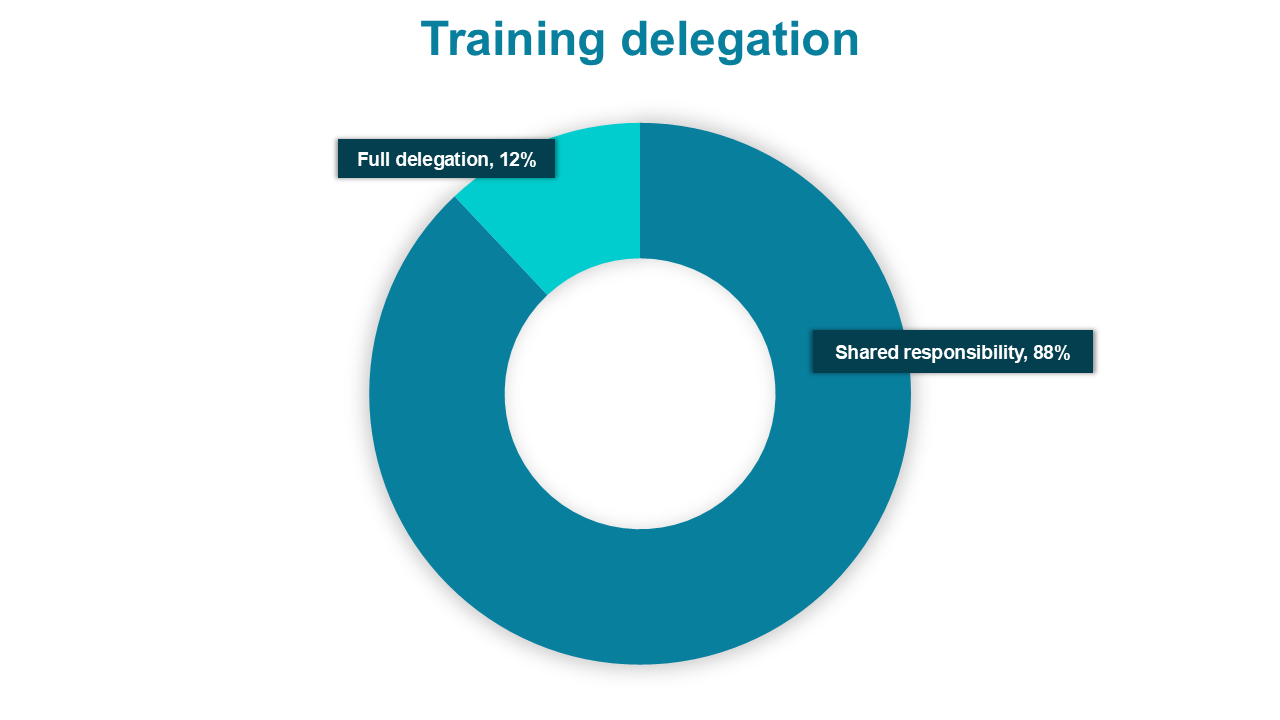
Training was usually a shared responsibility. Almost all participating Insurers shared training responsibilities with MGAs, while one Insurer fully delegated this function to its MGAs.
Monitoring
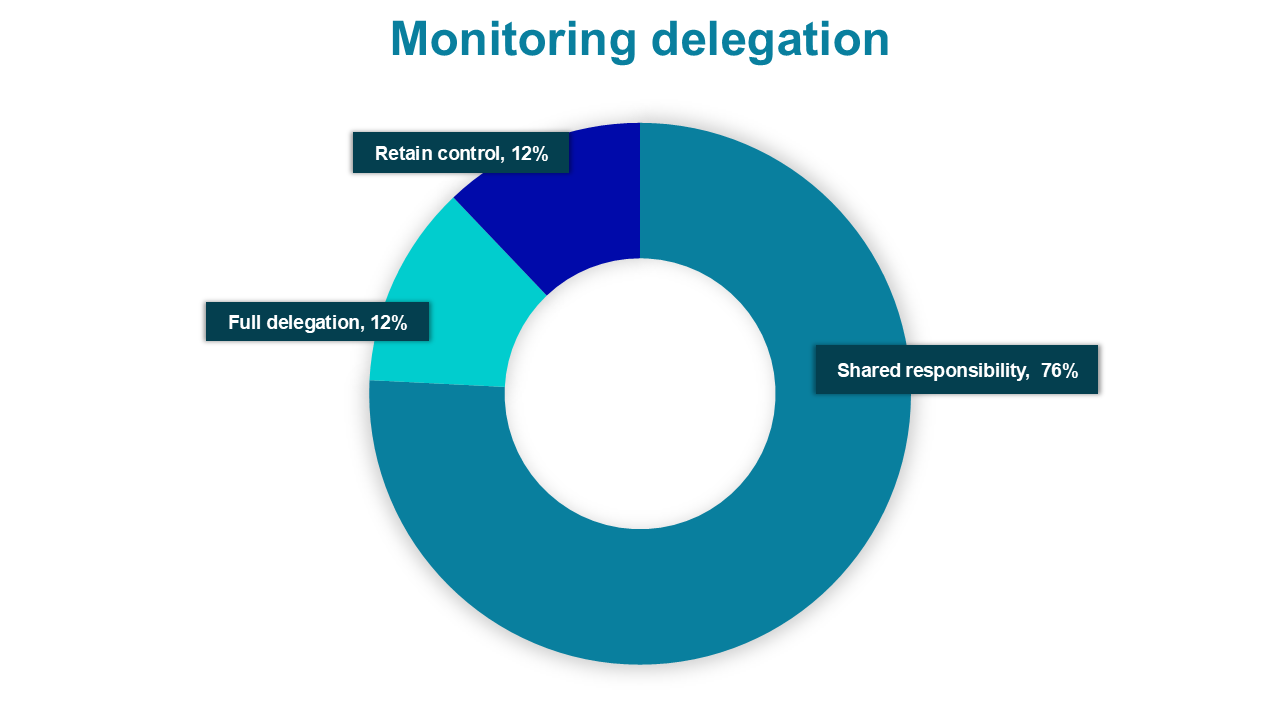
Most participating Insurers shared monitoring responsibilities with MGAs. One Insurer fully delegated this function to its MGAs, and one did not delegate it.
Across all four functions, the most common arrangement was a shared responsibility model between the Insurer and the MGA, with the Insurer retaining final accountability. These differences across functions reflect varying degrees of control and oversight over agent-related delegated activities.
3.1.3 Further delegation
FSRA asked participating Insurers whether they allowed their MGAs to further delegate agent-related functions to other entities or individuals. For example, an Insurer may delegate a function to an MGA, which may then further delegate that function to another entity or individual (such as a contracted corporate agent/agent).
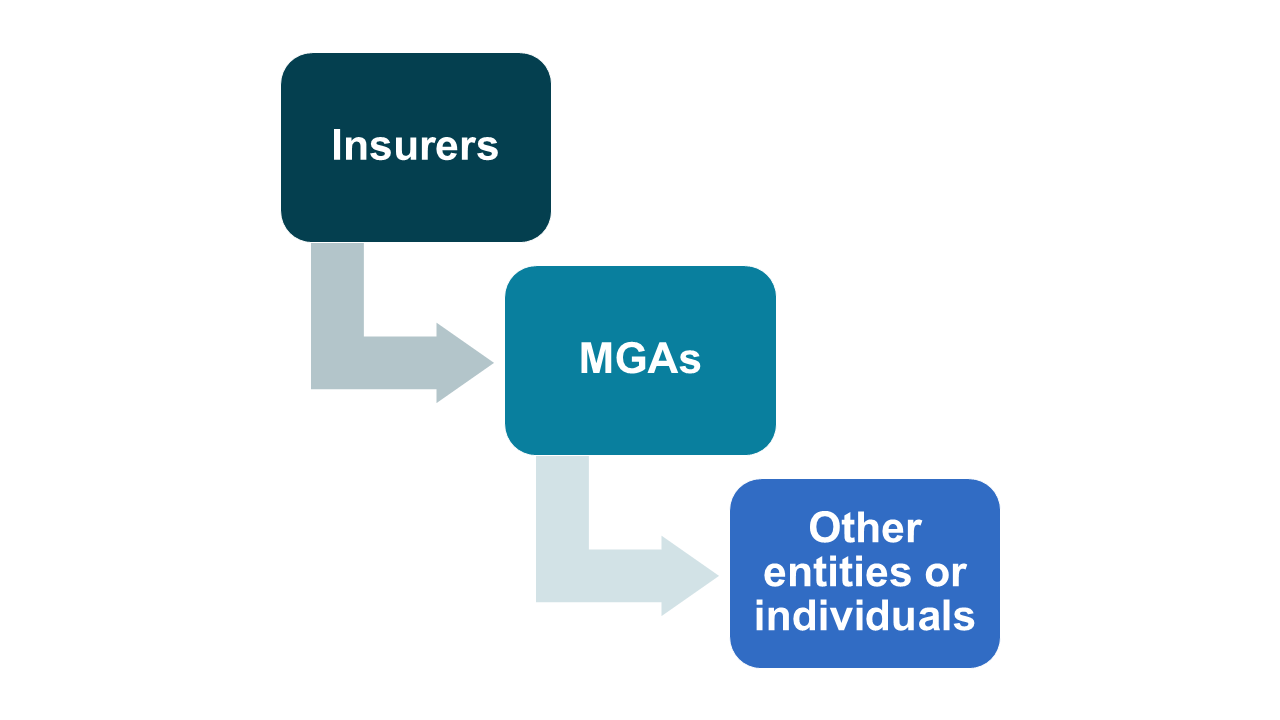
Most participating Insurers reported that their contractual agreements did not specify whether further delegation of agent-related functions to another entity or individual is allowed or prohibited.
Less than half of participating Insurers reported setting and communicating formal written expectations/requirements on how MGAs should assess and confirm any further delegated agent-related functions. Less than half also required MGAs to formally report back in writing on the progress and/or completion of further delegated functions.
One Insurer reported that its contractual agreements prohibit all MGAs from further delegation.
3.2 Monitoring and supervision
FSRA asked participating Insurers how they monitored and supervised MGAs and agents as part of their overall business practices. This section presents observations based on the direction of oversight (i.e., which party reviewed whom).
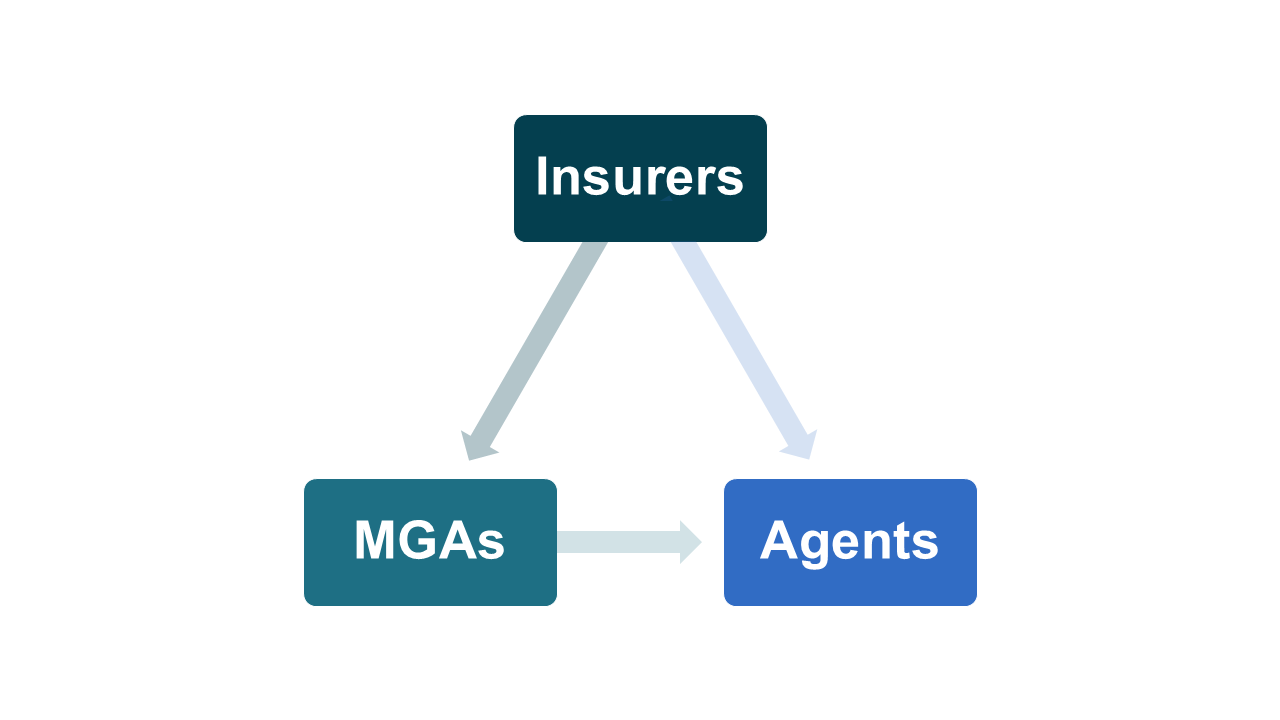
3.2.1 Insurers reviewing MGAs
FSRA asked participating Insurers whether they conduct formal reviews or audits of their MGAs.
Review/audit practices varied across Insurers. The majority of participating Insurers reported conducting reviews or audits of selected or all MGAs to assess whether delegated functions were being sufficiently carried out. Less than half reported that they did not conduct MGA reviews or audits. All Insurers that conducted reviews reported using formal review cycles, and most required MGAs to formally report back on the progress or completion of delegated functions. The number of formal non-Compliance Review Survey (CRS)[31] MGA reviews or audits conducted by Insurers annually ranged from 0 to 26.
Most participating Insurers also reported asking MGAs to complete the Canadian Life and Health Insurance Association’s (CLHIA) CRS. These Insurers reported using formal review cycles, and in most cases, formally communicating CRS results to MGAs.
3.2.2 MGAs reviewing agents
FSRA asked participating Insurers whether they required their MGAs to conduct formal reviews or audits of agents.
Proactive agent reviews
The majority of participating Insurers required all MGAs or selected MGAs to conduct proactive agent reviews to identify and address potential concerns before specific issues arise. Among these Insurers, most required MGAs to report on the results. The number of proactive agent reviews conducted by MGAs ranged from 0 to approximately 700 and represented between 0% and 25% of each MGA’s active agent population. Some Insurers reported ‘N/A’, indicating that they did not track these reviews.
Reactive agent reviews
The majority of participating Insurers required all or selected MGAs to conduct reactive[32] agent reviews in response to specific issues or concerns that had been identified. Among these Insurers, all required MGAs to report on the results. The number of reactive agent reviews conducted by MGAs ranged from 0 to approximately 100 and represented between 0% and 3% of each MGA’s total active agent population. Some Insurers reported ‘N/A’, indicating that they did not track these reviews.
3.2.3 Insurers reviewing agents
FSRA asked participating Insurers whether they supervised or monitored agents who sell their products. The majority of participating Insurers reported directly supervising or monitoring agents who sell their products. Most participating Insurers reported that they performed formal risk assessments of agents and conducted formal proactive agent reviews or audits.
For Ontario agents, the number of proactive agent reviews ranged from 0 to approximately 120, representing between 0% and 4% of each Insurer’s active agent population.
Life agent examination findings (2025-26)
In parallel with the Questionnaire, FSRA examined 50 life agents across 10 MGAs in 2025–26. These examinations were conducted separately from the Questionnaire and provide insight into agent-level practices within the L&H distribution chain.
The examinations identified deficiencies in life agent adherence to industry business best practices and provided additional supervisory context for understanding potential gaps in training, monitoring, and oversight of life agents contracted with MGAs.
The examination program required life agents to complete a questionnaire, after which FSRA reviewed client files and interviewed agents to verify licensing and adherence with business best practices.
FSRA identified over 800 needs-based sales best practice issues based on the 251 client files submitted by life agents, covering key products such as Term Life, Segregated Funds, Whole Life, and Universal Life. These issues were consistent across MGAs, with at least 80% of MGAs showing deficiencies across all five needs-based sales best practices. A detailed findings report will be published in Fall 2026.
Key observations
- Needs and sales practices: 66% of agents did not properly complete needs and suitability assessments. FSRA found this issue at all 10 MGAs.
- Illustrations: Across all MGAs, 74% of failed to provide illustrations showing policy value projections and underlying assumptions.
- Advisor disclosure: 53% of agents at 9 MGAs did not follow advisor disclosures best practices.
Conclusion
The Questionnaire results confirm that MGAs continue to play a critical role in the distribution of L&H insurance in Ontario. All participating Insurers reported relying on MGAs for key agent-related functions —including agent recruitment, screening, training, and monitoring— reinforcing MGAs’ central role in the distribution chain.
The Questionnaire set out to explore how many MGAs operate in Ontario. Participating Insurers reported contracting with a wide range of MGAs, from approximately 10 to 300 per Insurer. Within this sample, FSRA found no clear correlation between an Insurer’s market share and the number of MGAs it engages. As a result, these observations reflect only the participating Insurers and do not support an industry-wide estimate. An industry-wide total would require MGA licensing and/or a comprehensive industry-wide survey.
Agent-related results also varied. FSRA observed no clear correlation between the size of Insurers’ agent populations and the proportion of agents who actively sell in a given year. While the number of contracted agents varied widely across respondents, most participating Insurers reported that only a relatively small proportion of agents were active each year. This suggests that a substantial share of the agent population may have limited or no sales activity, reinforcing the need for proportionate, risk-based oversight of agent populations.
FSRA also conducted agent examinations across 10 MGAs. These examinations identified non-adherence to widely accepted industry best practices, indicating potential weaknesses in the suitability of contracted agents directly interacting with end consumers. High rates of non-adherence in needs assessments, documentation, and advisor disclosure indicate that many agents are not consistently applying needs-based selling practices or meeting established industry standards at the point of sale.
These gaps indicate that despite the important role MGAs play, their practices for ensuring agents are suitable to deal with consumers, and Insurer’s oversight of them, are inconsistent and often inadequate. Overall, this variability underscores the need for an MGA Framework as well as ensuring a needs-based sales approach is followed, to strengthen end-to-end oversight of the insurance intermediation chain.
In the interim, FSRA will continue to leverage insights from supervisory and thematic reviews to inform licensing, policymaking, and ongoing risk assessment and supervision. These observations will also inform FSRA’s FY2026-27 supervisory focus.
FY2026–27 supervisory plan
As part of its FY2026–27 supervisory plan, FSRA has proposed the following supervisory activities. Some initiatives are already underway, while others are intended to commence during the fiscal year.
Intelligence Questionnaire (phase 2)
FSRA has launched Phase 2 of its Intelligence Questionnaire to further deepen its understanding of Insurer–MGA market practices by extending its Questionnaire to include six additional Insurers beyond the eight reviewed in Phase 1. Insurers have been selected using a risk based approach that leverages distribution data reported through the Annual Statement of Market Conduct (ASMC)[33], along with each Insurer’s Ontario market share as measured by DWP.
Phase 2 will continue to assess Insurer–MGA relationships, product distribution practices, and oversight frameworks, including controls over delegated activities. The results are intended to strengthen risk identification, inform supervisory prioritization, and assess policy and licensing implications.
Orphaned clients thematic review
FSRA plans to undertake an exploratory thematic review focused on understanding orphaned life insurance policyholders. The purpose of the review is to understand how Insurers identify and service policyholders who no longer have an active advisor relationship ("orphaned clients"), and to assess whether consumers continue to receive appropriate support despite the absence of an advisor.
FSRA is exploring this issue in response to stakeholder feedback suggesting that some policies remain in force, but the associated policyholders are no longer actively serviced by an advisor, creating potential risks such as missed policy options, policy lapses, outdated beneficiary information, and reduced claims readiness. This work will assess how widespread orphaned policies are, the consumer risks that arise when policyholders lack an assigned agent, and the current industry practices for tracking and servicing these customers. Insights from the review will help FSRA identify practical next steps to enhance consumer protection, and support more consistent service standards across Insurers.
Recruitment practices sweep
FSRA plans to undertake a cross-sectoral recruitment practices sweep to better understand recruitment and screening practices and their potential impact on consumer outcomes. The sweep will assess how regulated entities evaluate whether identified candidates are suitable to carry on business as an agent in their respective sectors prior to making sponsorship or recruitment decisions.
Supervisory remediation and ongoing monitoring
In addition, FSRA will continue to evaluate supervisory remediation and follow-up activities of examined entities to ensure timely and appropriate regulatory responses and corrective actions are implemented by Insurers and MGAs for effective mitigation of identified risks.
Further, FSRA supervision will also conduct additional examinations of life agents contracted through MGAs to assess compliance with the Act, regulations, FSRA rules, and industry best practices (details to follow in subsequent life agent publication).
Through all of the aforementioned risk-based supervisory activities, FSRA aims to advance key market conduct outcomes by strengthening the competence and conduct culture within regulated sectors, supporting industry participants through transparent articulation of regulatory expectations, and credibly deterring misconduct by holding entities accountable for their behaviour.
FSRA thanks its stakeholders for their ongoing collaboration and constructive engagement, which has strengthened regulatory intelligence, enhanced understanding of emerging market conduct trends and risks, supported the assessment of systemic issues and sector-wide implications, and informed regulatory priorities, supervisory approaches, and initiatives aimed at improving consumer outcomes.
[1] In this Questionnaire, a person or entity is acting as an MGA in Ontario when, pursuant to an agreement, the person or entity facilitates the sale of L&H Insurance by engaging in any of the following activities, or holds themselves out as engaging in any of the following activities: 1. Recruiting agents or prospective agents; 2. Screening agents or prospective agents to confirm the agent is suitable to carry on business as an agent; 3. Providing training to agents; 4. Supervising or monitoring the activities of agents; 5. Entering into written agreements with agents who sell or solicit life insurance or accident and sickness insurance; 6. Recommending agents to Insurers to sell or solicit life or accident and sickness insurance; 7. Transmitting an insurance application or a policy of insurance between an Insurer and an agent; 8. Such other activities and functions as may be prescribed by Authority Rule. Note: The term “MGA” used in this Questionnaire refers to the collective of entities that perform MGA delegated activities, including MGAs, sub-MGAs, associate general agents (AGAs), national accounts (NAs), and third-party administrators (TPAs). MGAs may be licensed as a corporate agency or a partnership with FSRA. The Government of Ontario is currently consulting on potential changes relating to MGA licensing framework, the outcome of which may change how MGAs are defined in the future.
[2] Strengthening consumer protection around managing general agencies.
[3] Findings from these examinations will be published in FSRA’s Life and Health Insurance Agent Supervision Report (expected at the end of 2026).
[4] CCIR Cooperative Fair Treatment of Customers (FTC) Review – Consolidated Observations Report.
[5] Delegation refers to obligations that exist between the Insurer and the MGAs, where the Insurer assigns/distributes tasks, responsibilities, and/or decision-making authority to its MGAs. MGAs may perform certain agent-related functions on behalf of the Insurer, including but not limited to agent recruiting, screening, training, and monitoring. Insurers and MGAs may share the responsibilities, or MGAs may perform all the responsibilities for the Insurer.
[6] Agent refers to an individual licensed in Ontario to solicit insurance on behalf of an Insurer or transmit an application for L&H insurance. The Ontario life agent may also be licensed in other Canadian provinces or territories.
[7] The Canadian Life and Health Insurance Association’s (CLHIA) publication, The Approach: Serving the Client Through Needs-Based Sales Practices, is used as a reference for industry best practices, including needs-based sales practices, product illustrations, advisor disclosure, reasons-why letters, and client notes. During an examination, best practices are reviewed when examining client files during an agent examination.
[8] Active agent refers to an agent who sold one or more policies during the reporting year.
[9] A tiered-recruitment business model focuses on recruitment and actively encourages agents to recruit new individuals. This model may also be referred to as a multi-level marketing, network-marketing, recruitment-focused, or tiered-level model. The agents are paid not only for their own insurance sales, but also for those made by people that agents recruit, and so on. This results in MGAs paying multiple layers of agents for one insurance sale.
[10] The MGA/Independent Distribution model refers to a multi‑insurer distribution network consisting of MGAs and independent agents or firms that are not exclusively aligned to a single carrier. MGAs serve as the primary intermediaries, operating with or without delegated authority from Insurers and supporting independent agents and firms in distributing products across multiple Insurers.
[11] Recruiting refers to a process for identifying, soliciting, and providing information to an individual to contract with or be employed by the Insurer and/or MGA.
[12] Screening refers to a one-time process for initially assessing the suitability of an individual and identifying any related risks.
[13] Training refers to ongoing education and skill building that helps agents understand products, comply with regulations, and serve clients.
[14] Monitoring refers to reviews or audits conducted by the Insurer and/or MGAs and includes, but is not limited to, examinations, compliance reviews, internal audits, investigations, and other assessments of market conduct.
[15] The term "proactive" indicates that risk-based review/audit is initiated by the entity, typically before any specific issues/concerns arise.
[16] FSRA selected 10 MGAs and examined 5 life agents per MGA. Risk based selection of MGAs was informed by market share (segregated funds and UL policies), and past supervisory outcomes. FSRA selected life agents based on licensing tenure (both seasoned and newly sponsored life agents), commission levels, geographical diversity, and random sampling.
[17] FSRA examined 50 agents, of whom 47 submitted policies for review. The findings presented in this report are based on FSRA’s analysis of those 47 agents’ files. Percentages reflect the proportion of these 47 agents for whom the identified issue was observed.
[18] These observations are derived exclusively from the data reported by participating Insurers and should not be interpreted as representative of the entire insurance industry.
[19] Refer to questions 1 to 20 of the Questionnaire.
[20] Contractual agreements refer to written agreements between the Insurer, MGA, and/or agent, as well as any additional supporting documents and schedules.
[21] The top five MGAs are based on business placed in Ontario, with rankings determined by: i) highest DWP; and ii) highest number of policies sold.
[22] A captive distribution model/channel is an arrangement where agents or firms sell insurance products for only one Insurer. They mainly work exclusively with the company’s products, brand, and processes, rather than offering products from multiple Insurers. It may also be referred to as the direct or exclusive model.
[23] In Ontario, newly licensed agents are required to be sponsored by an Insurer for two years in accordance with Ontario agent licensing regulations.
[24] Refer to questions 21 to 27 of the Questionnaire.
[25] L&H insurance classes include Life, A&S, and Annuities.
[26] L&H insurance sub-classes include Life - Term, Whole Life, Universal Life, Other; A&S - Critical Illness, Disability, Health & Dental, Long-term care, Prescription drug, Travel Health, Other, Annuities including Segregated Funds.
[27] Annuities include all types of annuity contracts, such as Variable Annuity (Segregated Funds); Certain Annuity; Deferred Annuity; Guaranteed Annuity; Indexed Annuity; Life Annuity. It also includes Guaranteed Interest Accounts (GIAs).
[28] Guidance Conduct of Insurance Business and Fair Treatment of Customers.
[29] Insurance Core Principles, Standards, Guidance and Assessment Methodology ICP 19.
[30] Refer to questions 28 to 75 of the Questionnaire.
[31] The CLHIA Standardized MGA Compliance Review Survey (CRS) is a standardized survey that CLHIA member companies have agreed to use to assist in assessing the performance of compliance functions that are carried out by MGAs. It asks about an MGA's P&P related to its contractual and statutory responsibilities for compliance. It also asks about specific practices in the MGA's compliance program.
[32] The term "reactive" indicates that review/audit/investigation is initiated by the entity, typically after any specific issues/concerns arise.
[33] Annual Statement on Market Conduct.