
On this page
Executive summary
Auto insurance is mandatory in Ontario and when accidents occur, victims may rely on insurance benefits to cover treatment and rehabilitation costs. Effective oversight of Health Service Providers (HSPs) helps ensure these benefits are used appropriately to support recovery and achieve fair outcomes.
As of April 1, 2026, the Financial Services Regulatory Authority of Ontario (FSRA) licenced 5,213 HSPs in Ontario, allowing them to be reimbursed directly for eligible expenses under the Statutory Accident Benefits Schedule (SABS). FSRA’s supervision focuses on HSPs’ billing and business practices for auto insurance claims. This is separate and distinct from the health care standards of practice overseen by health regulatory colleges.
From April 1, 2024 - March 31, 2026:
- FSRA licensed HSPs were responsible for approximately 99% of the $1.58 billion processed through the Health Claims for Auto Insurance (HCAI) system
- more than 361,000 accident victims accessed treatment
Given this scale and potential risk to consumers, FSRA conducted three proactive supervision initiatives to ensure HSPs are complying with the Insurance Act, its regulations, and FSRA Rules (Requirements).
| Supervision initiatives | Top findings | Compliance rate |
|---|---|---|
| Preferred Provider Network (PPN) on-site examinations |
| 16% |
| Focused compliance reviews |
| 42.5% |
| Sanctioned practitioner reviews |
| N/A |
While the reviews did not identify any direct consumer harm, non-compliance with the Requirements increases the risk of fraud. FSRA's regulatory response varied by case, with some HSPs receiving a warning letter and others entering into a voluntary undertaking. Compliant business practices minimize opportunities for fraud and promote fair treatment of consumers. FSRA is extending the 2024-2026 Health Service Provider Supervision Plan through to March 2027 and will conduct additional targeted and follow-up reviews to ensure compliance. A final report will be released once this work is complete. When necessary, FSRA may take enforcement action, especially in cases of consumer harm or repeated non-compliance.
FSRA continues to modernize its approach through enhanced digital processes and data analytics tools to support risk-based supervision while reducing burden on the industry.
FSRA expects licensees to demonstrate effective governance, accountability, and sound business practices. FSRA strongly encourages HSPs to review the Quick Guide to compliance and an educational webinar recording to gain a better understanding of specific Requirements and related compliance expectations.
Background
FSRA is an independent regulator dedicated to enhancing consumer protection in Ontario’s financial services sectors. This includes promoting high standards of business conduct and safeguarding consumers’ rights and interests.
HSPs that chose to be licensed with FSRA must have business practices in place that comply with the Requirements that form the auto insurance framework in Ontario. These Requirements under the auto insurance framework are separate and distinct from the health care standards of practice for regulated health professionals (RHPs) established and overseen by health regulatory colleges. In Ontario, health regulatory colleges ensure that RHPs deliver safe, professional, and ethical care by setting practice standards, investigating complaints, and disciplining members when necessary. In contrast, FSRA’s supervisory activities focus on HSPs’ business and billing practices within the auto insurance framework to ensure funds for medical and rehabilitation benefits are requested and issued to support care and recovery. Effective supervision is essential to ensure adherence to the Requirements and addressing fraud.
This Report outlines FSRA’s supervisory activities during fiscal years 2024/25 and 2025/26, conducted in relation to the 2024-2026 HSP Supervision Plan. These activities emphasize FSRA’s proactive supervision initiatives to enhance sector compliance and awareness, thereby reducing opportunities for fraud.
Licensed HSPs must submit required forms using HCAI for direct payment[1]. Unlicensed providers cannot receive direct payment from insurers; however, they are still required to submit forms through HCAI[2]. Pursuant to the Health Claims for Auto Insurance Guideline (HCAI Guideline), the following forms are required to be submitted through HCAI:
- OCF-21 – Auto Insurance Standard Invoice
- OCF-23 – Treatment Confirmation Form
- OCF-18 – Treatment and Assessment Plan
- Form 1 – Assessment of Attendant Care Needs
The Unfair or Deceptive Acts or Practices (UDAP) Rule supports consumer protection by prohibiting practices and behaviours that are unfair or harmful to consumers. HSPs engaging in unfair or deceptive acts or practices may be investigated and subject to enforcement action.
FSRA’s objectives for the HSP sector include:
- regulating and supervising licensed HSPs to ensure adherence to the Requirements
- monitoring and evaluating trends while engaging in risk-based, principles-based and outcomes-focused regulation
- promoting high standards of business conduct by identifying and deterring deceptive or fraudulent conduct and practices
Supervisory activities
FSRA reviews licensed HSPs’ conduct and compliance with the Requirements. Initiatives in 2024/25 and 2025/26 prioritized fostering compliance and awareness in the sector to help reduce opportunities for fraud.
FSRA conducted three key supervision initiatives to address areas identified in the 2024-2026 HSP Supervision Plan:
- Examinations of HSPs that participate in Preferred Provider Networks (PPNs)
- Focused compliance reviews
- Sanctioned practitioner reviews
All reviews evaluated adherence to the Requirements. Findings indicate ongoing challenges, highlighting the need for continued supervision to protect consumers and maintain sector integrity.
PPN on-site examinations
PPNs may be used to connect claimants to appropriate care following a motor vehicle accident (MVA). Insurers establish their PPNs and may refer claimants to HSPs within their network. Before making a referral, insurers must provide claimants with clear written notice that explains the nature of their relationship with the HSP, the services to be provided, and the claimant’s rights. Use of an insurer’s PPN is optional, and insurers must obtain the claimant’s written consent before proceeding. A claimant can choose to decline the insurer’s PPN referral and doing so will not prejudice or adversely affect their entitlement to benefits under the SABS.
Given the potential impact on consumers, FSRA conducted on-site examinations of licensed HSPs participating in insurer PPNs. FSRA’s focus during these examinations entailed compliance with the Requirements, HSP conduct and claimants’ freedom of choice.
FSRA identified instances where some HSPs were using a form of agreement with their affiliate clinics[3] that may have constituted a solicitation or demand for a referral fee contrary to section 6 (2) of FSRA’s UDAP Rule. Upon review of the Affiliate Agreements, it was observed that these form of agreements lacked sufficient clarity regarding the nature of the support services provided. FSRA did not find evidence of consumer harm resulting from the Affiliate Agreements, but the lack of clarity in the agreements nonetheless raised compliance concerns. These concerns were addressed following the examinations, and the agreements of each identified HSP have been updated accordingly. FSRA reminds insurers and HSPs that referral fees are prohibited under the UDAP Rule and that all reasonable steps must be taken to ensure business arrangements do not create, or appear to create, referral fee arrangements.
FSRA also identified insufficient controls in insurers’ claims handling practices, specifically noting that signed disclosure forms required under the SABS were not consistently retained. This was the subject of a separate review by FSRA, and details can be found in the 2025 Auto Supervision Interim Report.
FSRA conducted 31 on-site examinations of HSPs pertaining to PPNs.
PPN on-site examination criteria:
- the HSP attested in their 2023 AIR that they were a participant of an insurer PPN and/or were an affiliate clinic
- the HSP billed at least $350,000 through HCAI in 2023 (excluding affiliate clinics)
PPN on-site examination results:
- 6 HSPs entered a voluntary undertaking with FSRA for failing to comply with the Requirements
- 20 HSPs were issued a warning letter for failing to comply with the Requirements
- 5 HSPs were compliant with the reviewed criteria
- 1 HSP surrendered its licence and was not examined
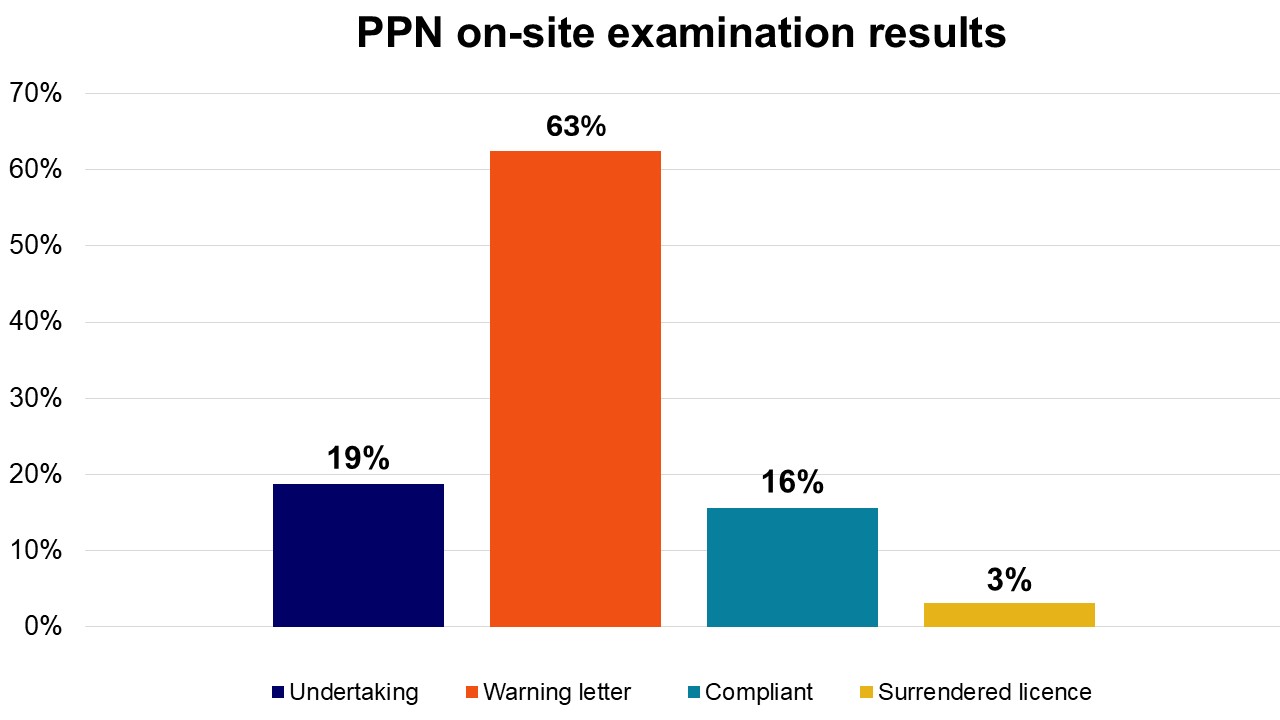
The main issue noted in the undertakings was HSPs using a form of agreement with their affiliate clinics that may have constituted a solicitation or demand for a referral fee contrary to the UDAP Rule. The warning letters highlighted compliance gaps across multiple areas, with the most common being unsigned OCF-21 invoices and inaccurate HCAI rosters. The full list of examination findings can be found below.
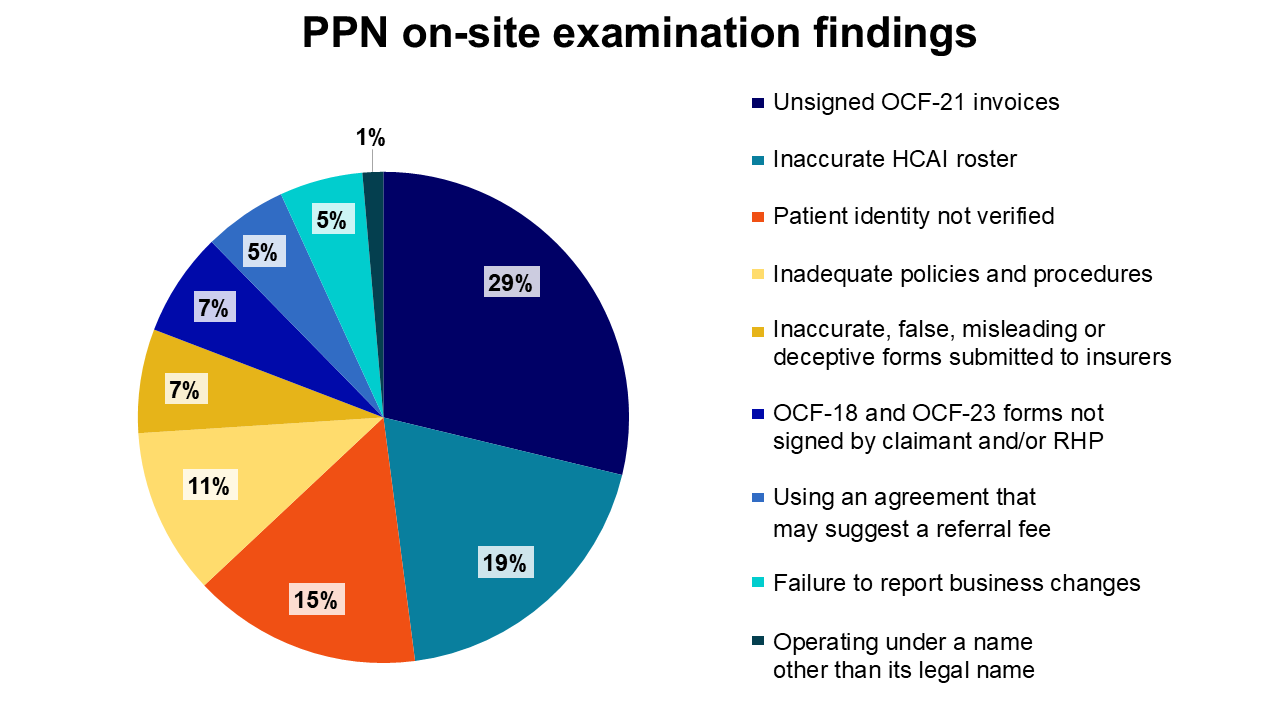
The non-compliant findings identified during the PPN on-site reviews are outlined below:
| PPN on-site examination findings | Reference | Expectation | Risk mitigation |
|---|---|---|---|
| Unsigned OCF-21 invoices | HCAI Guideline | HSPs must always keep on file an original paper version, or an electronic true copy, of the OCF-21 that includes the authorized signature of the regulated health professional (RHP) and/or the ‘Authorized Signatory’. | Requiring signed OCF-21 invoices ensures that billing is authorized and traceable to a RHP, or authorized signatory, reducing the risk of falsified or unauthorized billing. |
| Inaccurate HCAI roster | HCAI Guideline | HSPs must keep their HCAI roster current. RHPs that are no longer working for the clinic must be removed and de-activated on the HCAI system within 10 days. | Maintaining an accurate and up‑to‑date HCAI roster ensures that only authorized and currently affiliated RHPs can submit or be associated with claims, reducing the risk of unauthorized billing under inactive or former providers. |
| Patient identity not verified | O. Reg. 90/14, Section 5 | HSPs shall take all reasonable steps to verify the identity of each individual. | Verifying patient identity helps prevent impersonation or misuse of another individual’s health coverage or benefits, thereby reducing the risk of fraudulent claims and ensuring services are provided to the correct person. |
| Inadequate policies and procedures | O. Reg. 90/14, Section 17 | HSPs shall establish and implement policies and procedures which address all aspects of section 17 of O. Reg. 90/14. | Establishing and implementing comprehensive policies and procedures creates consistent controls and oversight, reducing the risk of fraudulent practices and ensuring compliance with regulatory requirements. |
| Inaccurate, false, misleading or deceptive forms submitted to insurers | O. Reg. 90/14, Section 9 | HSPs shall not submit to an insurer any form, plan, invoice or other type of document or information that contains inaccurate, false, misleading or deceptive information. | Prohibiting the submission of inaccurate, false, misleading, or deceptive information ensures the integrity and accuracy of claims information, reducing the risk of fraudulent activities such as improper billing, misrepresentation of services, or unauthorized treatment. |
| OCF-18s and OCF-23s not signed by claimant and/or RHP | O. Reg. 34/10, Sections 38, 40 | All treatment and assessment plans must be signed by the claimant, unless the insurer waives this requirement, as well as the RHP. | Requiring both claimant and RHP signatures on OCF‑18s and OCF‑23s ensures that plans are reviewed, agreed upon, and authorized by all relevant parties, reducing the risk of unauthorized services and fraudulent billing. |
| Using an agreement that may suggest a referral fee | UDAP Rule, Section 6 (2) | Agreements shall not infringe on section 6 (2) of the UDAP Rule. | Prohibiting referral fee agreements promotes transparency and reduces conflicts of interest by ensuring services are recommended based on patient need, not financial incentives. |
| Failure to report business changes | O. Reg. 90/14, Sections 19, 20 | HSPs must ensure that FSRA is provided with updated contact information within five business days after the day the relevant change occurs. | Timely reporting of business changes reduces regulatory risk by ensuring FSRA has accurate, up-to-date information, enabling effective oversight. |
| Operating under a name other than its legal name | O. Reg. 350/13, Section 1 | If the HSP carries on business under a name other than its legal name, the HSP must ensure that the name is reflected in the public register. | Ensuring all operating names are listed in the public register reduces misrepresentation risk by promoting transparency and enabling clear identification and accountability of the HSP. |
The results of these reviews indicated an overall compliance rate of 16%, which is significantly below expectations and raises concern. At this level, compliance does not reliably support the intended control outcomes, thereby increasing exposure to fraud risk. Improved adherence to the Requirements is critical to mitigating this risk, and insurers must bear some responsibility for ensuring that HSPs, particularly those within PPNs, conduct their business in a compliant manner. FSRA expects licensees to demonstrate effective governance, accountability, and sound business practices to achieve and sustain compliance. Where repeated instances of non-compliance are identified, FSRA will consider escalating the matter for appropriate enforcement action. This low level of compliance also raises concerns about how insurers manage their PPN agreements, particularly in relation to the treatment of SABS claimants and the value proposition for consumers.
Focused compliance reviews
The outcomes of FSRA’s 2022-2024 supervisory reviews and input from stakeholders pointed to a need for better understanding of regulatory requirements. Based on this feedback, FSRA conducted focused compliance reviews targeting common areas of non-compliance, and used a new online platform to streamline workflows, improve operational efficiency and reduce burden.
The HSP desk review questionnaire has been integrated onto a new online platform which streamlines the delivery and retrieval of the desk review, allowing licensees to upload requested documents and provide real time results. This has reduced the administrative burden on licensees, while mitigating the potential for human error. Information is date stamped and automatically transferred with instructions. This new platform has enabled faster turnaround times and reduced back and forth between FSRA and licensees, while supporting risk-based supervision.
FSRA conducted 40 focused compliance reviews using the newly modernized process.
Focused compliance review criteria:
- the HSP has never been subject to an examination or review by FSRA
- the HSP billed between $30,000 - $3,000,000 through HCAI in 2024
Focused compliance review results:
- 23 HSPs were issued a warning letter for failing to comply with the Requirements (may include multiple non-compliant findings)
- 17 HSPs were compliant with the reviewed criteria
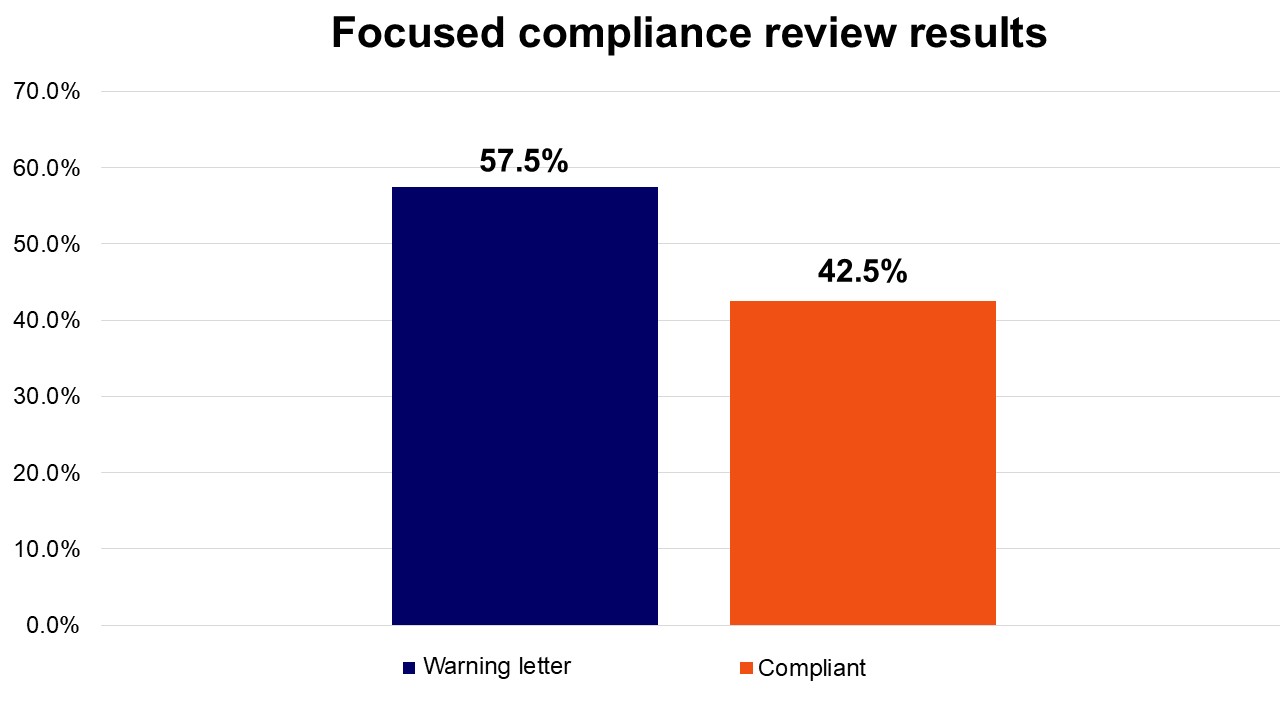
The warning letters highlighted a broad range of compliance issues, with the most common being inaccurate HCAI rosters, inaccurate calculation when reporting SABS claimant count and operating under a business name other than the legal name reflected in FSRA’s public registry. The full list of findings can be found below.
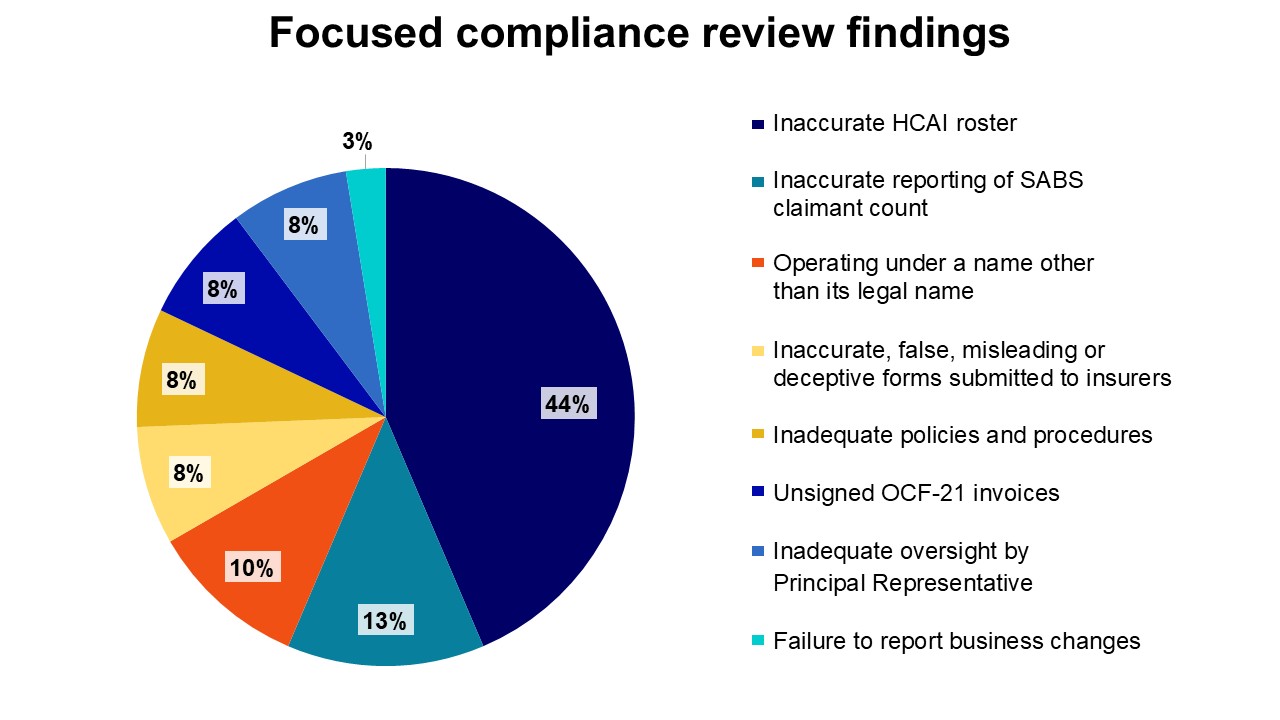
The non-compliant findings identified during the focused compliance reviews are outlined below:
| Focused compliance review findings | Reference | Expectation | Risk mitigation |
|---|---|---|---|
| Inaccurate HCAI roster | HCAI Guideline | HSPs must keep their HCAI roster current. RHPs that are no longer working for the clinic must be removed and de-activated on the HCAI system within 10 days. | Maintaining an accurate and up‑to‑date HCAI roster ensures that only authorized and currently affiliated RHPs can submit or be associated with claims, reducing the risk of unauthorized billing under inactive or former providers. |
| Inaccurate reporting of SABS claimant count | Financial Services Regulatory Authority of Ontario Rule 2022 - 001 Assessments and Fees | The number of SABS claimants shall be the total number of persons for which payment has been received for one or more listed expenses (calculated per accident) during the prior calendar year. | Accurate SABS claimant reporting ensures proper fee calculation, reduces underreporting risk, and helps detect potential billing inconsistencies. |
| Operating under a name other than its legal name | O. Reg. 350/13, Section 1 | If the HSP carries on business under a name other than its legal name, the HSP must ensure that the name is reflected in the public register. | Ensuring all operating names are listed in the public register reduces misrepresentation risk by promoting transparency and enabling clear identification and accountability of the HSP. |
| Inaccurate, false, misleading or deceptive forms submitted to insurers | O. Reg. 90/14, Section 9 | HSPs shall not submit to an insurer any form, plan, invoice or other type of document or information that contains inaccurate, false, misleading or deceptive information. | Prohibiting the submission of inaccurate, false, misleading, or deceptive information ensures the integrity and accuracy of claims information, reducing the risk of fraudulent activities such as improper billing, misrepresentation of services, or unauthorized treatment. |
| Inadequate policies and procedures | O. Reg. 90/14, Section 17 | HSPs shall establish and implement policies and procedures which address all aspects of section 17 of O. Reg. 90/14. | Establishing and implementing comprehensive policies and procedures creates consistent controls and oversight, reducing the risk of fraudulent practices and ensuring compliance with regulatory requirements. |
| Unsigned OCF-21 invoices | HCAI Guideline | HSPs must always keep on file an original paper version, or an electronic true copy, of the OCF-21 that includes the authorized signature of the RHP and/or the ‘Authorized Signatory’. | Requiring signed OCF-21 invoices ensures that billing is authorized and traceable to a RHP, or authorized signatory, reducing the risk of falsified or unauthorized billing. |
| Inadequate oversight by Principal Representative | O. Reg. 349/13, Section 2 | The Principal Representative of an HSP shall provide adequate oversight of business and billing practices. | Adequate oversight by the Principal Representative ensures strong governance and monitoring of billing and business practices, reducing the risk of fraudulent activity through increased accountability and supervision. |
| Failure to report business changes | O. Reg. 90/14, Sections 19, 20 | HSPs must ensure that FSRA is provided with updated contact information within five business days after the day the relevant change occurs. | Timely reporting of business changes reduces regulatory risk by ensuring FSRA has accurate, up-to-date information, enabling effective oversight. |
The results of these reviews indicated a compliance rate of 42.5%. FSRA recognizes that improvement is needed in this area and expects licensees to demonstrate effective governance, accountability, and sound business practices to achieve and sustain compliance with the Requirements. Where repeated instances of non-compliance are identified, FSRA will consider escalating the matter for appropriate enforcement action.
Sanctioned practitioner reviews
FSRA continues to actively monitor the websites of Ontario’s health regulatory colleges to identify sanctions issued against RHPs. Sanctions may impose restrictions on practitioners or result in the suspension or revocation of a certificate of registration. When a certificate of registration is suspended or revoked, the practitioner is prohibited from using their credentials to certify, provide, or bill for specific listed expenses.
Health regulatory colleges in Ontario are responsible for ensuring that RHPs deliver health care services safely, ethically, and professionally. Their mandate includes establishing standards of practice, investigating complaints regarding their members, and taking disciplinary action when appropriate.
FSRA’s oversight in this sector focuses on the business and billing practices of licensed HSPs. When sanctions are identified, FSRA cross-references the information with HCAI data to determine whether a sanctioned practitioner’s credentials were used for billing, in circumstances where they were not authorized to practice.
During fiscal years 2024/25 and 2025/26, FSRA identified and reviewed 158 sanctions (suspensions or revocations) issued by health regulatory colleges. Of these sanctioned practitioners, 33 were listed on the HCAI rosters of 78 licensed HSPs. FSRA reviewed these instances to assess potential unauthorized activity, such as invalid authorizations or inappropriate billing. HSPs were notified when a sanctioned practitioner appeared on their current HCAI roster. Principal Representatives were also reminded that it is prohibited to misrepresent an unlicensed practitioner as licensed, including submitting documents using the credentials of a practitioner whose licence has been suspended or revoked.
FSRA identified isolated instances in which invoices were submitted using the credentials of practitioners whose licences had been suspended by their regulatory college. The review confirmed that the services were provided by other authorized RHPs, and the invoicing errors were due to administrative oversight rather than intentional misconduct. HSPs were reminded that they must not submit any form, plan, invoice, or other required document to an insurer containing inaccurate, false, misleading or deceptive information.
FSRA will explore further opportunities to strengthen regulatory effectiveness. Data on sanctioned practitioners will remain a key risk indicator for FSRA’s ongoing supervisory reviews, supporting compliance oversight and ensuring SABS benefits are used appropriately for authorized care.
Next steps
FSRA works to protect consumer interests by promoting strong business practices across the HSP sector. Licensed HSPs must comply with all applicable provisions of the Requirements. During 2024/25 and 2025/26, FSRA focused on improving compliance and raising awareness to help reduce opportunities for fraud and ensure adherence to the Requirements.
The findings presented in this Report indicate ongoing non-compliance with regulatory requirements across the HSP sector. FSRA has developed and delivered a range of educational resources to promote awareness of regulatory obligations, including a Quick Guide to compliance and webinar recording for sector participants. However, FSRA’s supervisory experience in this sector shows that compliance reviews and examinations are the most effective tools for reinforcing requirements and driving meaningful improvements in HSP business and billing practices. Through targeted supervisory reviews, FSRA sets clear expectations for policies, procedures, and adherence to best practice standards to ensure accurate billing and fair consumer outcomes.
As noted in this Report, non-compliant supervisory findings may result in warning letters, undertakings, or administrative monetary penalties, depending on the severity and frequency. In addition to the outcomes of the 2024/25 and 2025/26 reviews, HSPs subject to enforcement action by FSRA were escalated to FSRA’s Legal and Enforcement team. FSRA ensures greater awareness of its enforcement actions by making certain information publicly available on the Enforcement Actions and Warnings section of the FSRA website and through news releases. The combination of a news release and public posting of the enforcement information promotes awareness and reduces risk to consumers.
Based on the observations identified in this Report, further action is needed to ensure compliance with the Requirements. Non-compliance creates conditions that increase the risk of fraud. Given these findings, FSRA is extending the 2024-2026 HSP Supervision Plan until March 31, 2027.
FSRA takes a risk-based, evidence-informed and outcomes-focused approach to engaging with HSPs to support the implementation of appropriate remedial actions and ongoing compliance with the Requirements. Targeted compliance reviews may be undertaken, where warranted, to promote adherence to regulatory expectations and enhance awareness of obligations. FSRA will also consider whether further regulatory action is appropriate to achieve and sustain compliance with the Requirements.
To support this work, FSRA will continue advancing modernization efforts by further developing a centralized HSP supervisory tool. The HSP supervisory tool will enhance data-driven analytics to support risk-based supervision. This will improve compliance decision-making and risk assessment capabilities, allowing FSRA to operate more proactively and allocate resources to areas of higher risk. FSRA will also continue to modernize the HSP desk review process and implement enhancements to improve operational efficiency and overall effectiveness.
Continued supervision is critical to driving consistent compliance across the sector and safeguarding fair outcomes for claimants seeking SABS benefits following a MVA. FSRA is committed to transparency and will release a final report upon completion of all additional examinations and reviews.
Finally, FSRA acknowledges the efforts made by the HSPs reviewed to address compliance shortcomings in their business and billing practices. HSPs that comply with the Requirements are contributing to consumer protection by mitigating the opportunity for fraud. FSRA expects all HSPs to review this Report, and other relevant publications, to ensure they are complying with the law and regulatory expectations.
[1] S. 268.3 (1) of the Insurance Act.
[2] S. 49.1 of O. Reg. 34/10 (SABS).
[3] HSPs may refer business to an independent affiliated clinic for claimant care.